
What does a receding hairline look like?
A receding hairline means the front edge of your hair has moved backwards, usually at the temples or across the central hairline. You may notice a higher forehead, deeper corners or an emerging M-shaped outline. The change can be gradual, so comparing recent photographs can be more useful than relying on memory.
Some recession is also a normal part of maturation. A mature hairline may sit slightly higher than it did during adolescence without progressing to significant balding. The important question is whether the hairline continues to move backwards, or whether the rest of the scalp is also becoming visibly thinner.
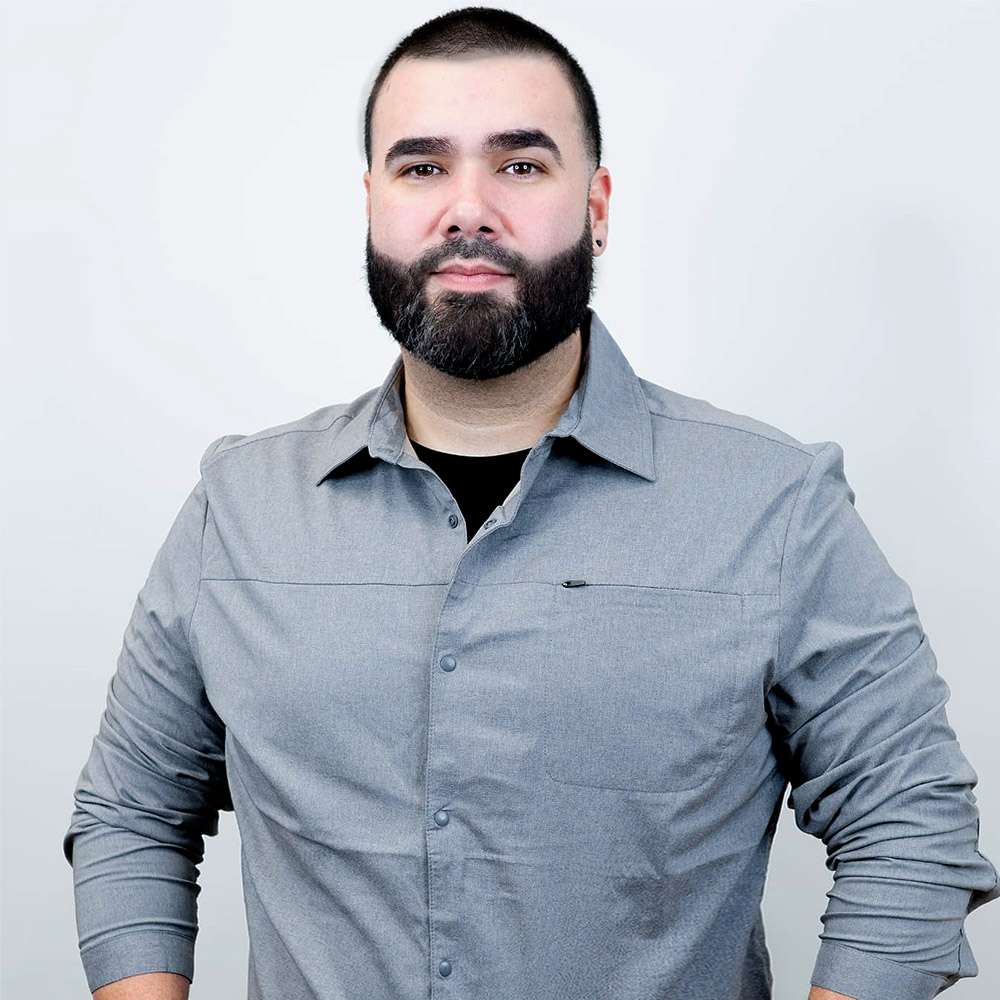
As a barber for 15 years, I pay close attention to the hairline because it is the most visible boundary of any short hairstyle. With SMP, a hairline has to suit your facial structure, age and remaining hair. A deliberately soft hairline is usually the most discreet choice, while a sharper edge-up can create a more freshly barbered appearance.
What is male pattern baldness?
Male pattern baldness, also called androgenetic alopecia, is an inherited pattern of progressive hair miniaturization. Dihydrotestosterone, or DHT, shortens the growth phase of susceptible follicles. Over time, individual hairs become finer and shorter before some follicles stop producing visible hair.
The pattern commonly begins with temple recession, a changing frontal hairline or thinning at the crown. It can involve one of these areas first, or both at the same time. As it progresses, the thinner areas may join, leaving stronger hair at the sides and back.
This is why “receding hairline” and “male pattern baldness” should not be treated as interchangeable. Recession describes what you can see at the front. Male pattern baldness describes the underlying pattern, which may affect the hairline, crown and top of the scalp.
How can I tell which one I have?
Look for changes in more than one area. If the temples have moved back but the crown and mid-scalp remain stable, you may be seeing mainly a receding hairline. If the crown is thinning, the parting looks wider, or hairs across the top are becoming finer, male pattern baldness is more likely.
Progression matters too. A stable hairline can be a mature hairline. Continued recession over time, especially alongside crown thinning, points more strongly towards an ongoing pattern of hair loss. Family history may offer a clue, but it cannot confirm the cause on its own.
Other types of hair loss can look different. Sudden patches, inflammation, scaling, scarring or rapid shedding deserve assessment by a qualified healthcare professional or dermatologist. SMP is cosmetic camouflage. It does not diagnose, prevent or treat the condition causing hair loss.
| What to look at | Mainly a receding hairline | Male pattern baldness more likely |
|---|---|---|
| Crown and mid-scalp | Remain stable | Crown is thinning, the parting looks wider, or hairs across the top are becoming finer |
| Progression over time | A stable hairline can be a mature hairline | Continued recession over time, especially alongside crown thinning |
Can SMP help with a receding hairline?
SMP can reduce the contrast between your scalp and hair by placing tiny pigment dots in the scalp. This creates the visual impression of follicle shadow and can make a receding hairline look more defined. It does not grow hair, change natural hair growth or damage existing follicles.
The best approach depends on how much hair remains and whether your loss is still progressing. If you keep your hair very short, a shaved finish can create a consistent shadow across the scalp. If you have thinning hair that you prefer to keep, pigment can be placed between existing hairs to reduce scalp show-through. I explain that option in more detail in my guide to SMP for men with thinning hair.
A hairline should not be drawn as a rigid ruler-straight line. I assess the existing pattern, facial proportions, age and the way you normally wear your hair. The aim is a believable transition, not a painted-on border. Your current hair loss pattern also matters because a design that looks suitable today needs to remain adaptable if further loss occurs.
What should I expect from an SMP consultation?
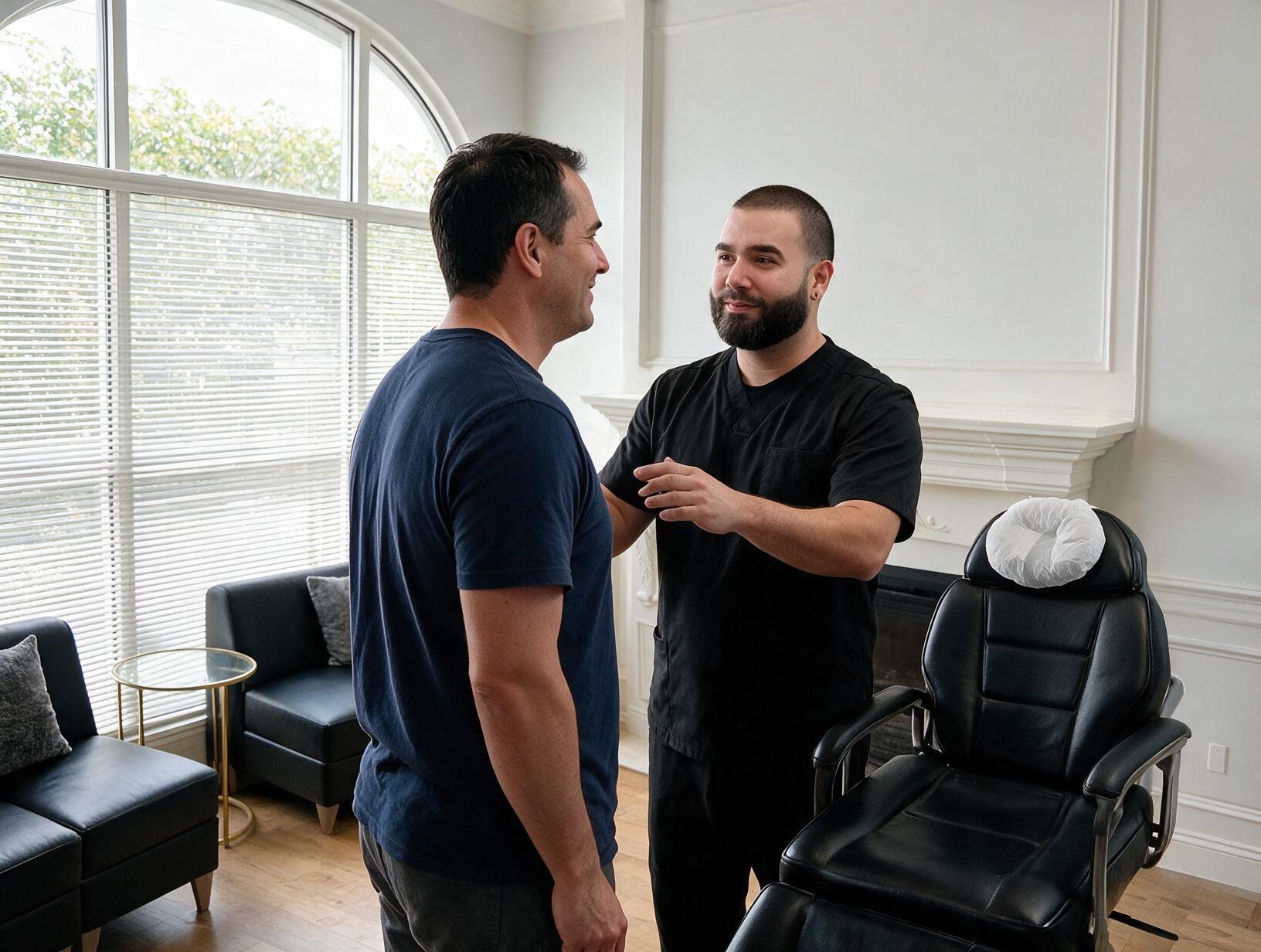
At Infinity Scalp, I use the consultation to discuss your hair loss pattern, preferred hairstyle, expectations and whether you want a shaved or density finish. We agree the proposed hairline before treatment, match the pigment to your current hair color and use numbing medicine during the procedure.
SMP usually involves more than one appointment so the result can be built gradually. I start conservatively, allow the scalp to heal, then assess whether more density or definition is appropriate. The number and length of sessions varies with the size of the area and the result you want.
Before booking, disclose allergies, skin conditions, medication and any history of keloid scarring. Active eczema, psoriasis flare-ups, scalp acne and keloid-prone skin may require postponement or dermatology advice. Choose an experienced SMP professional, review healed work rather than only fresh results, and check the practitioner's training and safety qualifications. I am a Diplomat of the American Academy of Micropigmentation and a fully certified SMP technician through Beauty Everlasting, with bloodborne pathogen and infection-control training.
After treatment, you will need to keep the scalp dry, avoid sweating, hot showers, steam rooms and sun exposure for the period advised. Avoid swimming pools for 28 days after the final treatment, then protect the scalp with SPF. Pigment fades gradually over time, so future touch-ups may be appropriate rather than expecting a permanently unchanged result.
You can read more about the process on my scalp micropigmentation treatment page. Infinity Scalp is in Totowa, New Jersey, and I am happy to discuss whether your pattern and goals are suitable during a consultation. Contact Infinity Scalp when you are ready to ask questions.
If you would like an honest assessment of your hairline, you are welcome to book a consultation.