
What should I look at when choosing eyebrow shapes?
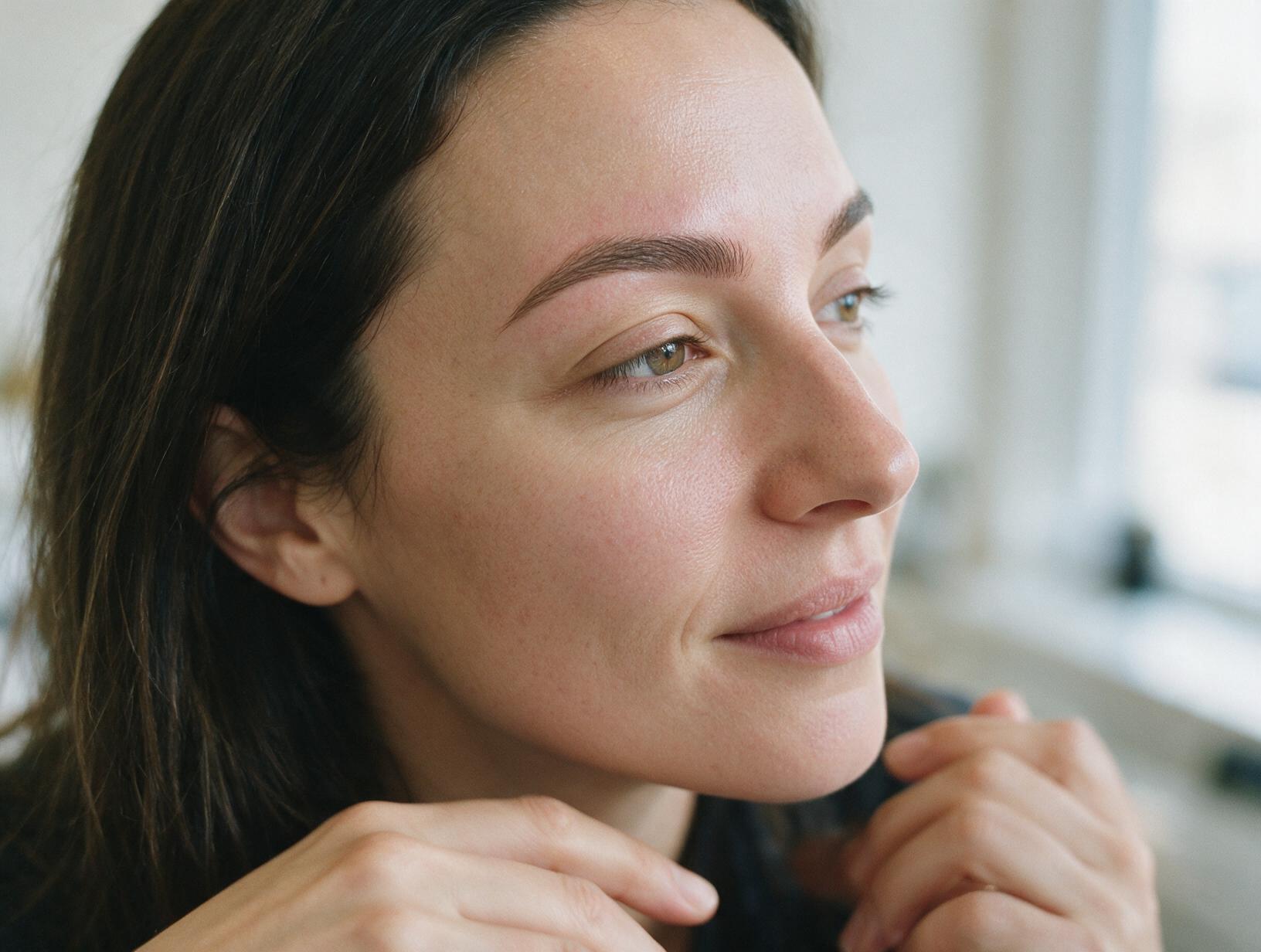
When I design brows, I look at your whole face rather than treating the eyebrows as two identical marks. Your forehead, eyes, cheekbones, nose, jawline and existing brow hair all affect how a shape will appear.
I also consider how you normally wear your makeup. Someone who prefers a softly defined everyday look may suit a different brow from someone who wants a more structured, makeup-like finish. Your natural hair color, skin type and the amount of brow hair you have also matter.
Faces are naturally asymmetrical. For that reason, I do not rely on eyebrow measuring tools, face-measuring devices or symmetrical mapping to force both brows into the same outline. I design freehand, using your facial structure and existing features as the guide.
At Infinity Scalp in Totowa, New Jersey, I discuss the proposed shape with you before any pigment is implanted. That conversation is important because permanent makeup softens and fades over time, but some pigment remains in the skin and shape changes are not always simple later.
Which eyebrow shape suits a round face?
A gently lifted arch can add definition to a rounder face, especially when the brow has a considered tail and is not too short. The lift does not need to be dramatic. A natural, moderate arch usually looks more balanced than a very rounded brow that follows the curve of the face too closely.
I pay attention to the starting point and tail as well as the arch. If the tail drops too far, the expression can look heavier. If it extends too long or too sharply, the brow may look disconnected from the rest of the face. I make those decisions by observing your features in person, not by applying a fixed template.
Which shapes of eyebrow work with longer, square or heart-shaped faces?
For a longer face, a slightly flatter brow can create a calmer horizontal balance. I would still keep some lift where it suits your natural brow, but a very high arch can make the face appear longer.
A square face often works well with a softly curved or gently angled brow. The aim is not to erase the character of a stronger jaw. Instead, a controlled curve can balance the face without making the brows look overly sharp.
With a heart-shaped face, I usually consider a softer, rounded arch and a carefully tapered tail. This can complement a narrower chin and prominent cheekbones. The final choice depends on the brow hair already present and how much definition you want.
These are useful starting points, not rules. Two people with the same broad face shape can need very different brows because their eyes, forehead, hair growth and expressions are different.
Should I choose hairstrokes, powder brows or combo brows?
The shape and the technique are separate decisions. Once we agree on the outline, I consider how the pigment should create the visual finish.
Ombre brows use fine machine-placed dots to create a gradient, makeup-like effect. They can suit someone who likes an even, softly powdered appearance and can also help cover faded microblading or older semi-permanent work.
Hairstroke brows create a more hair-like effect and may appeal to someone who wants a lighter, less filled-in appearance. Microblading uses a manual tool with rows of small needles, while machine methods use a digital PMU machine. Skin type matters here. Microblading may not be the best option for oily or thick skin, because the pigment can fade more quickly there.
Combo brows combine hairstrokes through the front with shading through the body and tail. They sit between a textured brow and a softly filled brow, which can work well when you want detail at the front but more definition elsewhere. You can read more about microblading or combo brows before your consultation.
I also offer the SofTap Hand Method. It uses a manual needle-cluster tool tapped by hand rather than a motorised machine, allowing a controlled pace and soft color placement. It is designed to create a gentle, natural-looking finish, but it may not suit someone who specifically wants bold saturation or a motor-driven procedure.
How do I know whether a brow shape will look natural after treatment?
A fresh result is not the final result. Permanent makeup commonly appears darker or stronger at first. During healing, the color softens, and the brows settle over approximately four to six weeks. Light flaking or light scabbing can occur, and I ask clients not to pick or scratch the area.
A touch-up after the initial procedure is usually part of the process. A touch-up is not an opportunity to redraw the brows casually. It is used to assess the healed color and make considered adjustments where appropriate. Color can often be refined later, while a substantial shape change may require partial removal before a new design is attempted.
Before booking, review healed work rather than judging only fresh photographs. Ask which technique and pigments were used, and make sure the practitioner can explain how the design was chosen for the individual face. My qualifications include certification in permanent makeup through Beauty Everlasting, Diplomate status with the American Academy of Micropigmentation, and training in pain control, bloodborne pathogen safety and infection control for body art professionals.
I use numbing during the procedure, and I screen for relevant concerns during consultation, including active skin conditions, blood-thinning medication, pregnancy or breastfeeding, keloid scarring history, diabetes, immune-compromising conditions and recent Botox or filler.
For more detail, I have also explained which brow style suits your skin and routine. You can contact Infinity Scalp to arrange a consultation.
Book a consultation when you feel ready, and we can assess the most suitable brow shape together.